
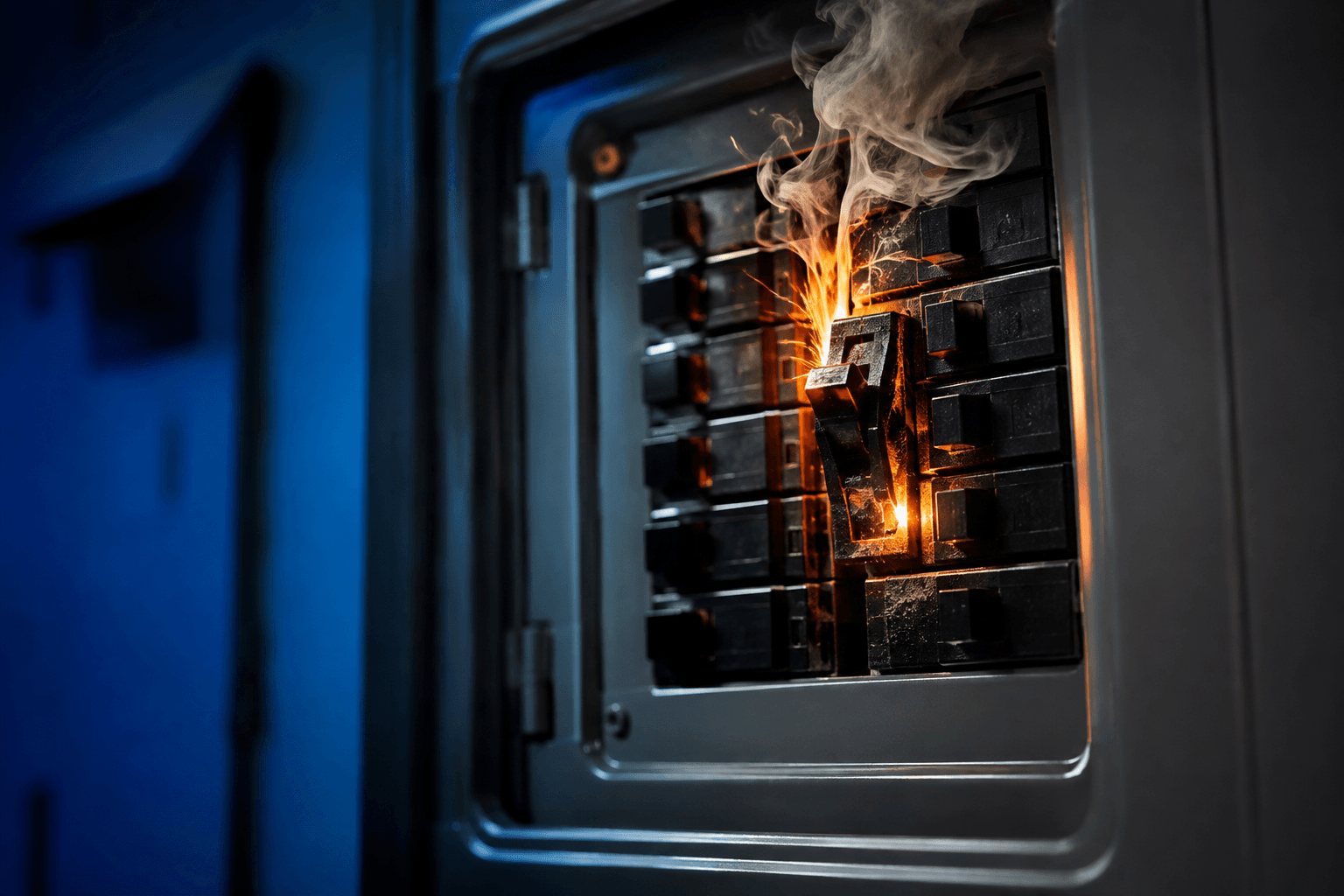
I was out at a job in Eureka last month, fixing a sticky door, when the homeowner asked if I’d “take a quick look” at her breaker panel while I was there. Four trips to the garage and two rounds of flipping the same switch later, I finally got the real story: it happened every single time she ran the space heater and the hair dryer at the same time. Every. Time. She’d been living with it for three months, resetting that breaker like it was part of her morning routine.
That’s the thing about a breaker that keeps tripping — most people just learn to work around it instead of asking why it’s happening. So let’s actually answer the question, Humboldt-style, with the questions I get asked in driveways, garages, and the occasional panicked text message at 9pm.
Is It Bad to Reset a Tripped Breaker Over and Over?
Once in a while, no big deal. A breaker trips because it’s doing its job — it senses too much current flowing through the wire and shuts things off before that wire gets hot enough to melt insulation or start a fire. That’s a feature, not a glitch.
But if you’re resetting the same breaker three, four, five times a week, that’s not a quirky house habit, that’s a pattern. Every trip is the breaker telling you something specific is wrong — too much load, a short somewhere in the line, or a fault sending current where it shouldn’t go. Ignoring the pattern and just flipping the switch is basically ignoring a smoke detector because the beeping is annoying.
Can I Just Put in a Bigger Breaker to Stop It From Tripping?
I get asked this more than you’d think, usually by someone who’s already halfway to the hardware store. The short answer: no, and please don’t.
The breaker is sized to match the wire behind it. A 15-amp breaker protects 14-gauge wire. Swap in a 20-amp breaker on that same wire and you haven’t fixed the overload — you’ve just removed the thing that was stopping the wire from overheating. Now instead of an annoying trip, you’ve got wire quietly cooking inside your wall with nothing to shut it off. Old fishing boats out on the bay don’t get bigger anchors just because the current picked up; you match the gear to the load. Same idea here, just with less salt spray.
Why Does It Only Trip When I Use Certain Appliances?
This is usually the easiest one to solve, and it’s almost always a circuit overload. Kitchens are the classic culprit — a coffee maker, a toaster, and a microwave all sharing one 15 or 20-amp circuit is basically asking three linebackers to fit through one door at the same time. Space heaters are the other repeat offender, especially this time of year when the fog rolls in and everybody’s got one tucked under a desk in an old Eureka house that was never wired for modern heating loads.
If the trip only happens with a specific combination of appliances, that’s a load problem, and it’s fixable — sometimes just by spreading things across different outlets, sometimes by adding a dedicated circuit for whatever’s drawing the most power. According to the Electrical Safety Foundation International, overloaded circuits are one of the leading causes of home electrical fires nationwide, so this isn’t a “someday” fix — it’s worth sorting out before winter space-heater season hits full swing.
Why Does It Trip Even When Almost Nothing Is Plugged In?
Now we’re in different territory. If a breaker trips with barely any load on it, that usually points to a short circuit or a ground fault — wires touching that shouldn’t be touching, insulation that’s worn through, or moisture getting somewhere it doesn’t belong. That last one is a big deal around here. Humboldt County humidity does not do old wiring any favors, and I’ve opened up more than one outdoor junction box that looked like it had been slow-cooked in coastal fog for a decade.
A short circuit or ground fault is a different animal than a simple overload, and honestly, this is where I stop being a handyman and start being a guy who picks up the phone. Diagnosing exactly where a short is hiding inside a wall means testing individual circuits, and that’s diagnostic work best handled through a proper electrical inspection rather than a guess-and-check approach.
Is a Breaker That Keeps Tripping a Fire Hazard?
Sometimes, yes — and I’d rather be blunt about it than polite. Repeated tripping caused by overloads or damaged wiring is exactly the kind of thing that, left alone, turns into a scorch mark behind a wall you can’t see. The Electrical Safety Foundation International estimates tens of thousands of home fires every year trace back to electrical distribution issues, with overloaded circuits and faulty wiring near the top of the list.
That doesn’t mean panic every time the lights blink. It means: occasional trip from a known cause, fine. Frequent trips, warm outlet covers, a burning smell, or a breaker that feels hot to the touch — stop resetting it and get it looked at.
Can a Handyman Fix a Tripping Breaker, or Do I Need an Electrician?
Fair question, and I’ll give you the honest answer instead of the one that gets me more work. In California, minor electrical repairs — swapping a bad outlet, replacing a switch on an existing circuit — fall under the state’s minor work exemption for jobs under $1,000 that don’t need a permit. That’s bread-and-butter handyman territory, and it’s the kind of thing we handle regularly through our electrical repair work.
But new circuits, panel work, or anything requiring a permit is a different license entirely. California requires a C-10 license for that scope of work, and for good reason — the person doing it should be certified through the state’s Division of Labor Standards Enforcement. If your tripping breaker turns out to need a new dedicated circuit or panel repair, that’s a job for a licensed electrician, full stop. I’ll tell a client that straight to their face even if it costs me the job, because a shortcut on a breaker panel is not the place to save a few bucks.
You can always check a contractor’s license status yourself through the Contractors State License Board before anyone touches your panel — five minutes of homework beats a redo six months later.
My professional advice
A electrical breaker that trips once in a blue moon during a Thanksgiving cooking marathon is just doing its job. A breaker that trips weekly, trips with nothing plugged in, or comes with a burning smell is trying to tell you something more serious. Figure out which one you’re dealing with before you decide whether this is a “add an outlet” problem or a “call someone now” problem — and if you’re not sure, that’s exactly the kind of thing worth having someone come take a look at rather than guess. If you’re in Humboldt County and your breaker’s been testing your patience, reach out through our electrical services page and we’ll figure out what’s actually going on.

Leave A Comment