
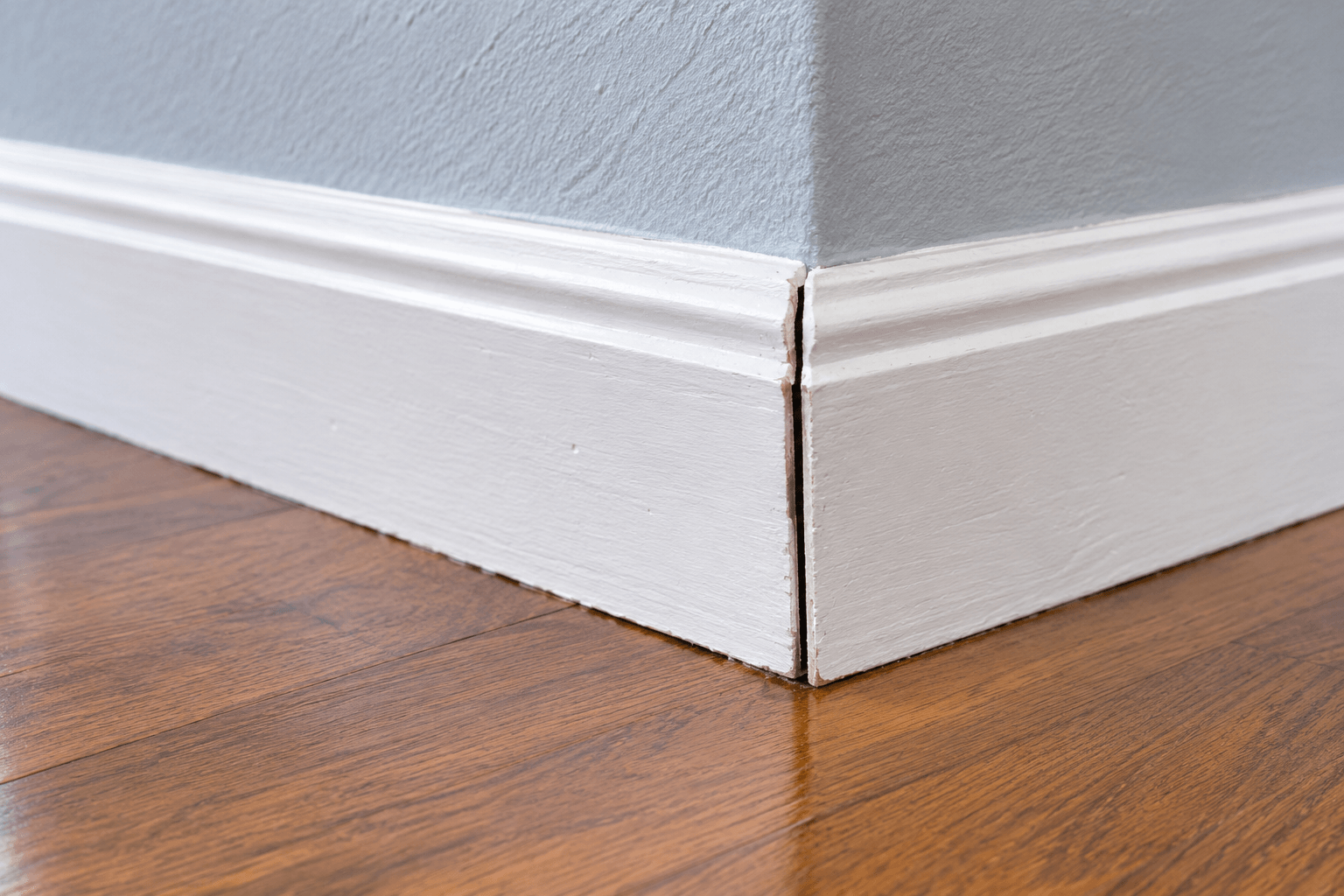
Let’s clear something up first: your house is not sinking into Humboldt Bay. The skinny gap that just showed up where your door casing meets at the top, or where two baseboards used to kiss in the corner, almost always has a far less dramatic explanation. It has more to do with your thermostat than your foundation. At Jaques of All Trades, we spend a good chunk of every fall telling relieved homeowners exactly that, and then fixing the gap so they never have to think about it again.
With Thanksgiving coming up and a houseful of relatives about to judge your living room from the good chair, there’s no worse time to find a crack you could park a credit card in. Most people try to fix it with a tube of caulk and some hope. Before you do, here’s what those gaps actually mean, which ones are fine to handle yourself, and when it’s worth calling Jaques of All Trades for real finish carpentry that holds up through the seasons.
Why Does My Trim Suddenly Have Gaps When the Heat Comes On?
Wood is hygroscopic, which is a fancy way of saying it soaks up moisture from the air and gives it back. Here in Eureka we spend much of the year wrapped in marine-layer fog, so interior trim swells up nice and snug through the summer. Then the wall heater, furnace, or woodstove fires up in late October, the indoor air dries out, and every stick of pine, poplar, and fir in your house shrinks a hair. One hair doesn’t matter. Forty feet of baseboard shrinking toward the same corner does. At Jaques of All Trades, we see the biggest movement in homes that go from damp and unheated to toasty overnight.
Sometimes the trim was set up to fail on day one. This Old House master carpenter Norm Abram has pointed out that when molding goes in with too much moisture in it, it shrinks as soon as the heat gets cranked up. A lot of trim around Humboldt County gets installed straight out of a damp garage or the back of a truck. That’s why my crew at Jaques of All Trades lets new trim sit in the room it’s going into before we make a single cut. Boring? Yes. Effective? Also yes.
The other usual suspect is how the inside corners were joined. Norm has also warned that mitered inside corners tend to open up over time, leaving a big gap right where everybody looks. A coped joint, where one piece is shaped to fit the profile of the other, hides seasonal movement much better. When Daniel, Christopher, Vincent, or I run baseboard for a Jaques of All Trades customer, the inside corners get coped. It takes longer, and it’s the reason those corners still look good come January.
Is a Gap in My Trim a Sign of a Bigger Problem?
Most of the time, no. This Old House’s guide to mending miter joints names three common causes of joint gaps: the house settling, a sloppy original install, and plain wood shrinkage. Here’s a simple test. If a gap opens in winter and closes by summer, that’s seasonal movement and nothing to lose sleep over. If you see an even gap running the full length of one wall between the baseboard and the floor, the floor may have dropped a bit. That’s common over crawlspaces, and plenty of older homes around Old Town and along the bay sit on raised foundations.
The real red flags look different. Trim that’s soft, swollen, or flaking near an exterior wall, a tub, or under a window usually points to a moisture problem, and in our climate that can mean rot. Diagonal cracks running from the corners of doorways, plus doors that suddenly stick, can mean settlement. Those call for a closer look, not another bead of caulk.
Can I Just Caulk the Gaps and Call It a Day?
Sometimes, sure. Paintable caulk flexes a little, which makes it a good fit for the seam where painted trim meets the wall, as long as the gap is roughly an eighth of an inch or less. Past that, caulk shrinks, cracks, and starts looking like someone frosted your baseboards with toothpaste. I’ve pulled trim in Cutten with so many layers of caulk on it you could count them like tree rings.
Stained or natural-finish trim is a different story. Caulk stands out on wood grain, and stuffing filler into a seasonal gap in the dead of winter can backfire: once the wood swells again in summer, it squeezes the filler right back out. For gaps between the floor and the baseboard, Angi recommends nailing shoe molding into the baseboard rather than the floor, so the flooring can move without dragging the trim along with it. It’s a small detail that separates a fix that lasts from one you’ll be redoing next fall.
When Should Trim Be Repaired, Re-Coped, or Replaced?
Plenty of gaps can be repaired: pull a miter tight with glue and pin nails, re-cope a corner that’s opened up, or add shoe molding to hide an uneven floor. Replacement makes more sense when you’ve got lots of gaps over an inch, or boards that are warped, split, or water-damaged.
Old homes deserve extra care. A lot of the Victorians and Craftsman bungalows around Eureka still have their original old-growth redwood and fir trim, and that wood is worth saving. Matching a historic profile can take some hunting or some careful millwork, which is right in the wheelhouse of our finish carpentry services in Eureka. Keep in mind, too, that homes built before 1978 may have lead paint on the trim, and the EPA requires lead-safe practices for most work that disturbs more than six square feet of painted surface indoors. Translation: don’t go after old trim with a power sander on a Saturday afternoon.
How Do I Keep Trim Gaps From Coming Back?
Start with humidity. Angi suggests keeping indoor humidity between 30 and 50 percent, which usually means running a humidifier in winter and a dehumidifier in summer. In Humboldt County that often just means a small humidifier near the wall heater and resisting the urge to run the heat like you’re trying to grow orchids. Steadier air means less wood movement and tighter joints all year.
Then hire someone who actually knows trim. The National Association of the Remodeling Industry suggests starting with word-of-mouth referrals and choosing a local pro who knows the area. Ask how they acclimate material, how they join inside corners, and what they nail into. If you get a blank stare, keep looking.
Get Your Trim Holiday
Gaps in your trim are rarely an emergency, but they’re the kind of thing that bugs you every time you walk past, especially with a houseful of guests on the way. Whether it’s a few opened miters, baseboards that pulled away from a sagging floor, or original redwood casings that need some love, Jaques of All Trades has been handling exactly this kind of work for Humboldt County homes and businesses since 2008. We’ll tell you honestly whether it’s seasonal, structural, or somewhere in between, and we’ll fix it so it stays fixed. Book your finish carpentry repair before the holiday rush, or call us at (707) 834-3933, and let’s get those corners tight before the turkey hits the table.

Leave A Comment