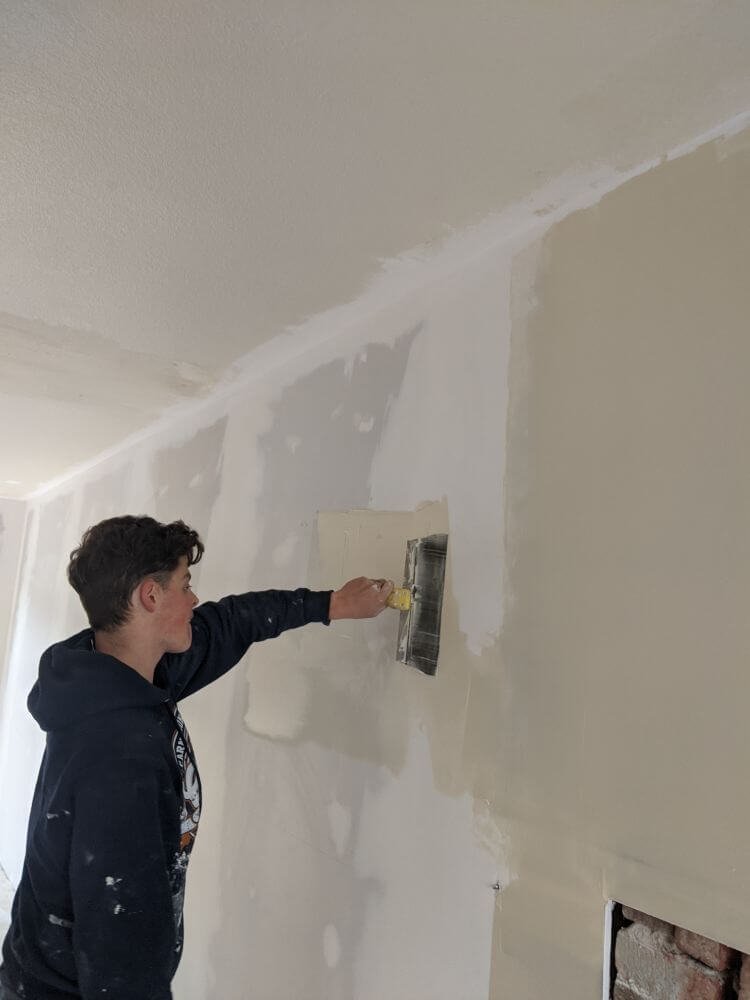
I get this question a lot. A homeowner calls me, sends me a photo, and says something like — “is this a big deal or can you just patch it?” And honestly, that’s exactly the right question to ask before anybody touches your wall.
The answer depends on what caused the damage, how deep it goes, and whether something behind the wall is still causing the problem. Get that diagnosis right and the fix is straightforward. Miss it and you end up repairing the same spot six months later wondering why it came back.
I’ve been doing this long enough to know that most drywall problems are not a big deal. But some of them are. Here’s how to tell the difference.
What You’re Actually Looking At
Drywall is a sheet of gypsum plaster sandwiched between two layers of paper. It’s everywhere — walls, ceilings, closets — because it’s affordable, fire-resistant, and easy to work with. But that gypsum core has two weaknesses: it doesn’t like getting hit hard, and it absolutely does not like moisture.
Understanding that helps explain why certain damage is an easy patch job and other damage means we need to open the wall up and find out what’s really going on.
The Repairs That Are No Big Deal
A lot of what I see on jobs is straightforward cosmetic damage. Stuff that looks worse than it is.
Nail holes, picture hooks, small dings. These are the most common calls I get. Totally normal wear and tear. A proper patch, the right texture work, and a coat of paint and you’d never know they were there.
Hairline cracks along seams. These show up in a lot of homes, especially newer builds that are still drying out and settling. The joint tape along the seams can develop small cracks as the house moves with temperature and humidity changes. It looks alarming but it’s usually just the tape failing — not the wall itself. We re-tape, feather in fresh compound, and paint.
Medium holes from doorknobs or old fixtures. I see these constantly. Doorknob goes through the wall, someone pulls out an old TV mount, a shelf bracket leaves behind a cluster of holes. Anything up to about six inches is very patchable. It takes the right backing, a few coats of compound with proper dry time between each, and careful texture matching — but it comes out clean.
When you book professional drywall repair services for these kinds of issues, the goal is simple: you shouldn’t be able to find the repair after we’re done. That’s the standard I hold myself to on every job.
The Damage That Needs More Than a Patch
This is where I have to be straight with you — and being straight with people is kind of the whole foundation of how we do business. Some damage can’t just be patched over. Doing that might look okay for a few months, but it’ll come back, and usually worse.
Soft or spongy walls. If you press on the wall near the damage and it gives, that drywall has been wet. The gypsum core absorbs moisture and once it does, it starts to break down from the inside. You can’t patch over compromised material — it has to come out. Before new drywall goes in, we need to find the moisture source and make sure the framing behind it is completely dry. Skip that step and you’re just putting a fresh surface over a future mold problem.
Visible mold or a persistent musty smell. I won’t sugarcoat this one. If you see black, green, or gray spotting on your walls — or a room just smells off and you can’t figure out why — there’s a good chance something is growing behind or inside your drywall. The EPA recommends that porous materials like drywall that have been wet for more than 48 hours and show signs of mold should be removed rather than cleaned. This isn’t a cosmetic repair. It’s a health issue, and it needs to be handled properly.
Large sections of damage. Once a hole gets past about six inches, patching starts to become more work than a clean replacement — and the result is harder to blend. At that size I’ll typically cut back to the nearest stud, install a new piece of drywall, tape the seams, and finish it out. Cleaner process, better result.
Pest damage. Rodents and termites can hollow out drywall from behind while the surface looks completely fine. If something feels off when you press on the wall — or you’re seeing small pinholes, frass, or other signs — the drywall needs to come down so we can see what’s happening to the framing underneath. You have to fix the structure before you fix the surface.
What Different Cracks Are Telling You
Not all cracks mean the same thing. Here’s a quick read on the most common ones.
Cracks running along seams — almost always normal settling. Very common, easy fix.
Diagonal cracks from the corners of doors and windows — this is the one to watch. A single small crack might just be cosmetic. But if you’re seeing this pattern at multiple openings, it can be a sign of foundation movement. Worth getting a second set of eyes on it.
Horizontal cracks across the middle of a wall — especially in a basement, this can indicate lateral pressure against the foundation. That’s a structural conversation, not a drywall conversation.
Cracks that keep coming back — this is the big one. If I patch something and it cracks again in the same spot within a few months, the drywall isn’t the problem. Something is still moving or there’s still moisture cycling through that area. According to This Old House, recurring cracks in the same location mean the underlying cause hasn’t been addressed — and repainting over them repeatedly just delays dealing with it.
What I Look For When I Come Out
When I show up to look at drywall damage, I’m not just looking at the surface. I’m pressing on the surrounding area to check for soft spots. I’m looking at the ceiling above and the floor below for related staining. I’m checking whether the crack pattern makes sense for normal settling or whether it suggests something structural. I’m looking for any discoloration that might indicate old moisture even if the area feels dry now.
That assessment piece is what I think separates a good drywall repair services visit from just slapping compound over a problem and hoping it holds. Finding the actual cause on the front end is what keeps you from calling me back for the same thing in six months.
No surprises. That’s how we operate. You’ll know what we found, what needs to happen, and what it’s going to involve before any work starts. That’s the way my family built this business and it’s not something I’m willing to compromise on.
The Part Most People Underestimate: Texture Matching
Here’s something I tell every homeowner who asks about DIY drywall repair — the patching part is actually the easy part. Texture matching is where most people run into trouble.
Most homes in the Eureka area have textured walls — knockdown, orange peel, or skip trowel are the most common. Every house is a little different. Replicating that texture so the repair disappears into the surrounding wall takes the right tools and a feel for how the original finish was applied. A flat patch in a knockdown room jumps out at you every time light hits the wall at an angle.
Family Handyman puts it plainly: even experienced DIYers struggle with texture matching, and anyone unfamiliar with spray textures is better off calling a professional to avoid a full repaint. I’d agree with that completely.
When to Call Us
Here’s my honest take: if the damage is bigger than your hand, involves any moisture at all, keeps coming back, or is somewhere you need a seamless finish — call a professional. It’s not about the patch. It’s about doing the diagnosis right, using the right materials, and leaving the wall looking like nothing ever happened.
That’s what we do at Jaques of All Trades. We’re a family business built on referrals from people in this community who trusted us to do good work and tell them the truth about what their home needs. We don’t upsell. We don’t show up and surprise you with a number that wasn’t discussed. We show up, we assess honestly, we do clean work, and we leave the space better than we found it.
If you’ve got drywall damage and you’re not sure whether it’s a patch or a replacement situation, give us a call or send a text. That’s what we’re here for. Our professional drywall repair services cover Eureka, CA and the surrounding area — reach us at 707-834-3933.
Leave A Comment